
Shiney or Shiny: Which Spelling Is Correct?
SEO Title: Shiney or Shiny: Which Spelling Is Correct?
Meta Description: Shiney or shiny—which spelling is correct? Learn the meaning of shiny, common spelling mistakes, examples, and easy ways to remember it.
Shiney or Shiny: Which Is the Correct Spelling?
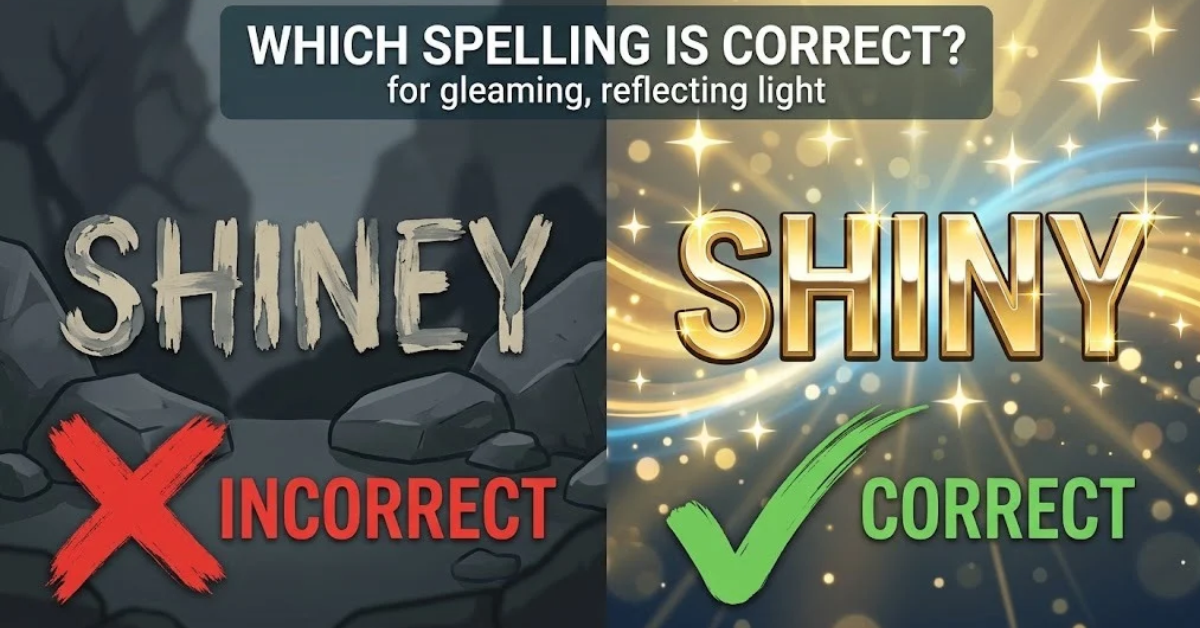
Have you ever written a sentence and paused to wonder whether the correct spelling is shiney or shiny? It is an easy mistake to make, especially because English spelling rules do not always follow the patterns we expect. If you are unsure which version to use, the answer is simple: shiny is the correct spelling in standard English.
The word shiny describes something that reflects light, looks bright, or has a smooth, polished appearance. You might use it to describe freshly polished shoes, a new piece of jewelry, glossy hair, or a clean car. Although shiney may look reasonable, it is a common misspelling rather than an accepted standard form.
In this guide, we will explain the difference between shiney and shiny, explore the meaning and usage of shiny, and share practical examples to help you remember the correct spelling.
Shiney or Shiny: Which Spelling Is Correct?
The correct spelling is shiny, with an i before the final n and no extra e.
| Spelling | Correct? | Explanation |
|---|---|---|
| Shiny | Yes | The standard English adjective meaning bright or reflective |
| Shiney | No | A common spelling mistake when writing the adjective shiny |
For example:
- Correct: She bought a shiny new handbag.
- Incorrect: She bought a shiney new handbag.
The confusion often comes from the verb shine. Since the word ends in e, it may seem natural to keep that letter when forming the adjective. However, the correct spelling changes to shiny.
Remember this simple rule: when describing something that shines, write shiny, not shiney.
What Does Shiny Mean?
The word shiny is an adjective used to describe something that reflects light or has a bright, glossy, or polished surface. Depending on the context, it can refer to physical appearance or be used figuratively.
Here are some common meanings of shiny:
1. Reflecting Light
Something shiny may reflect light because of its surface or finish.
Examples:
- The silver coin looked shiny under the lamp.
- Sunlight reflected off the shiny windows.
- She wore shiny earrings to the party.
2. Smooth and Glossy
Shiny can also describe surfaces that look smooth, polished, or glossy.
Examples:
- He polished his shoes until they were shiny.
- The wooden table had a shiny finish.
- Her hair looked shiny after conditioning.
3. New or Attractive
In informal expressions, shiny can suggest something new, appealing, or exciting.
Examples:
- The child was fascinated by the shiny new toy.
- The company introduced a shiny new smartphone.
- He was excited about his shiny new bicycle.
In these examples, the word communicates more than brightness. It can also suggest freshness, attractiveness, or visual appeal.
Why Do People Spell Shiny as Shiney?
The spelling mistake shiney is understandable because English has several words that retain their final e when forming related words. However, spelling patterns vary, and the word shiny follows a different pattern.
The adjective shiny is formed from the verb shine by replacing the final e with y.
Compare these forms:
- Shine → Shiny
- Shine → Shined
- Shine → Shining
Notice that shine becomes shiny when used as an adjective. The final e is removed before adding y.
This is why shiney is not the standard spelling, even though it may appear in informal writing, search queries, usernames, or occasional online posts.
Shiny in a Sentence: 10 Correct Examples
The best way to remember a word is to see how it works in everyday writing. Here are ten examples using shiny correctly.
- She bought a shiny gold necklace for her birthday.
- The children were excited to see the shiny new playground equipment.
- His black shoes looked shiny after polishing.
- The cat chased a shiny object across the floor.
- Freshly washed hair can look soft and shiny.
- The kitchen had shiny countertops and modern cabinets.
- He placed the shiny trophy on the shelf.
- Rain left the road looking shiny under the streetlights.
- The artist used shiny paint to create a reflective effect.
- She wrapped the present in shiny silver paper.
These sentences demonstrate how shiny can describe different materials, surfaces, objects, and appearances. In every case, the spelling remains the same.
Shiny vs. Shine: Understanding the Difference
Although shiny and shine are related, they serve different grammatical purposes.
Shine is primarily a verb. It describes the action of producing or reflecting light.
Examples:
- The stars shine brightly at night.
- Please shine the flashlight toward the door.
- Her shoes shine after a good polish.
Shiny is an adjective. It describes the appearance or quality of a person or thing.
Examples:
- The stars looked shiny in the photograph.
- He carried a shiny flashlight.
- Her shoes were shiny after polishing.
The distinction is straightforward: shine describes an action, while shiny describes a quality or appearance.
Synonyms for Shiny
If you want to avoid repeating the word shiny, several alternatives can help make your writing more precise. The best choice depends on what you are describing.
| Synonym | Meaning | Example |
|---|---|---|
| Glossy | Smooth and reflective | Glossy magazine cover |
| Gleaming | Bright and polished | Gleaming silverware |
| Lustrous | Rich, soft-looking shine | Lustrous hair |
| Radiant | Giving off or appearing to emit light | A radiant glow |
| Sparkling | Shining with small flashes of light | Sparkling diamonds |
| Polished | Made smooth or glossy | Polished wooden furniture |
| Glimmering | Shining faintly or intermittently | Glimmering lights |
These words are similar to shiny, but they are not always interchangeable. For instance, sparkling often suggests tiny flashes of light, whereas glossy usually refers to a smooth, reflective surface.
Choosing the right synonym can make your writing clearer and more descriptive.
Common Mistakes to Avoid When Using Shiny
Even though shiny is a simple word, a few common mistakes can appear in everyday writing.
1. Adding an Unnecessary E
The most common mistake is writing shiney instead of shiny.
Incorrect: The car has a shiney surface.
Correct: The car has a shiny surface.
2. Confusing Shiny With Shining
Both words are correct, but they are used slightly differently.
- Shiny: Describes a quality or appearance. Example: She has shiny hair.
- Shining: Often describes something producing or reflecting light, or the action of shining. Example: The sun is shining.
The choice depends on the sentence and the meaning you want to convey.
3. Using Shiny When Another Word Is More Precise
Not every bright-looking object is best described as shiny. A bright color may be vivid, a soft light may be glowing, and a clean surface may be polished.
For example, saying “a vivid red dress” communicates its color more precisely than “a shiny red dress” if the fabric does not have a reflective finish.
Easy Ways to Remember the Correct Spelling
If you frequently confuse shiney and shiny, these simple techniques can help.
- Remember the final Y: The adjective is always spelled shiny in standard English.
- Connect it with the meaning: A shiny object shines, but the descriptive word loses the final e.
- Read the sentence aloud: Seeing and hearing the word in context can help reinforce the correct form.
- Use a spelling checker: A grammar tool can identify shiney as a likely error when you intend to write shiny.
- Practice with examples: Write a few sentences using shiny to describe familiar objects, such as shoes, jewelry, or a car.
A helpful memory trick is to think of the two words together: shine → shiny. Once you remember this pattern, the spelling becomes easier to recognize.
Frequently Asked Questions About Shiney or Shiny
1. Is it shiny or shiney?
Shiny is the correct spelling in standard English. Shiney is a common misspelling and should generally be avoided in formal and informal writing when you mean something that reflects light.
2. Why is shiny spelled without an e?
The adjective shiny is formed from shine by replacing the final e with y. This produces the correct spelling without an extra letter.
3. What is the plural of shiny?
Shiny is an adjective, so it does not have a plural form. It can describe singular or plural nouns, as in “a shiny shoe” and “shiny shoes.”
4. What is the difference between shiny and glossy?
Both words describe reflective surfaces, but shiny is more general. Glossy often describes a smooth surface with a noticeable sheen, such as glossy paper, glossy paint, or glossy lipstick.
5. Is shiny a real English word?
Yes. Shiny is a standard English adjective commonly used to describe objects, materials, hair, and surfaces that reflect light or have a polished appearance.
6. Can shiney ever be correct?
Shiney may appear as a personal name, username, brand name, or intentional creative spelling. However, when describing something that shines, the standard English spelling is shiny.
7. What is the opposite of shiny?
Common opposites include dull, matte, and non-reflective. The best choice depends on the context. For example, a matte finish has little or no noticeable gloss, while a dull surface lacks brightness or luster.
8. What are some synonyms for shiny?
Common synonyms include glossy, gleaming, lustrous, sparkling, and polished. Each word has a slightly different meaning, so choose one that best describes the appearance you have in mind.
Conclusion: Shiney or Shiny?
When deciding between shiney or shiny, remember that shiny is the correct spelling in standard English. It describes something bright, reflective, glossy, or polished, while shiney is generally a spelling mistake when used with this meaning.
The easiest way to remember the rule is to connect the two words: shine becomes shiny when used as an adjective. Whether you are writing a school assignment, a social media caption, a product description, or a professional email, using the correct spelling makes your writing clearer and more polished.
If you want to strengthen your spelling and grammar further, explore related guides on commonly confused English words and everyday spelling mistakes. A little practice can make a noticeable difference in your writing.
